
“The first step toward change is awareness. The second step is acceptance”- Nathaniel Branden
This is a quote from a psychotherapist, but I think we can mold this into a fine quote about finances. To change your finances, you need to be aware of where your money is going. And then you must accept that some things are really, really expensive. My subject for today is the best method for tackling both of these problems.
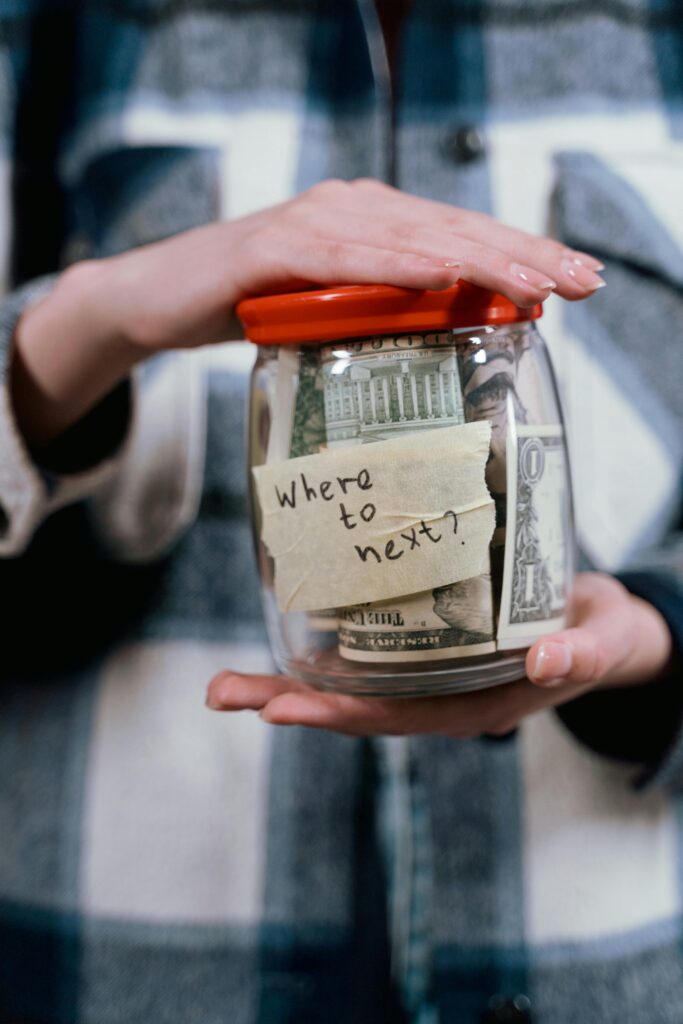
The sinking fund is hands down my favorite tool for being financially savvy. Its not interest rates or tax vehicles or loans or some fancy app. It’s the sinking fund. Taking a portion of your hard-earned money and setting it aside every month is the most powerful tool for when you start taking your finances seriously. I believe this is the foundation or the first step to mastering your finances.
The term originates in the 18th century when the British were setting aside money to “sink” their national debt. Every time you drop a dollar in a sinking fund be sure to salute King George I. You may also recognize this idea as the envelope method if you’re a follower of Dave Ramsey. The envelope method is where you stuff your cash into different envelopes. Each envelope is labelled after a different bill to pay. It’s the same principle of setting aside money; the sinking fund is just one of those envelopes.
The power of the sinking fund is to identify goals and timelines. In my experience, money has more to do with time than anything else (future blog post maybe?). Big and expensive wishes are not so costly over time. That dream car you’ve always wanted? Well, it doesn’t seem so bad when you save back some money each month. Let’s do a fun little example. I know you want the Dodge Challenger right away, but its $7,200 (Before you say anything, yes, I know that’s not realistic. I’m trying to do simple math here to make my point more powerful). If you extend your timeline from the right now to 3 years from now that still doesn’t seem so bad. 23 years old when you start and 26 years old when you’re finished. You’ll still be young and vibrant and have that nice car. There are 36 months in 3 years. So, $7,200 divided by 36 equals $200 a month. Now $200 does not hit the monthly budget hard, in fact I think its really easy. But what if you can’t wait that long for the car, the wheels are just so shiny, and too tempting. Well, I would say “can you find another $100 a month somewhere?” Maybe take the money out of your eating out budget and funnel it into the car sinking fund. Now $7,200 divided by $300 gets us 24 months. 2 years. 2 years, and it only cost you $300 a month, again that can be fairly easy once you have made up your mind to be intentional with your finances. The beautiful thing is that once your goal is fully funded, you have discretionary money to spend again. The pain is only temporary.
The following are the best reasons I can think of convincing you, the reader, to start your sinking fund today.
- Goal Setting. I can personally promise that you will feel good about setting a goal and then working towards that goal. Achieving goals releases that happy, fun chemical dopamine into your brain. Your mood will improve with all the new focus, and honestly it feels great. It forces you to be intentional with your paycheck. When I was getting out of debt, pay day became a very happy day for me, and not because I had visions of spending all my money on a night out on the town. I was happy because I would immediately pay off a big chunk of my credit card bill. The debt paydown was amazing. It really lit up my brain with all that dopamine. The reward for two weeks of hard work.
- Ambition and drive. I think this can be a good thing. At some point on your journey, you start thinking about what you can do to increase the money you’re making. Maybe you pick up a second job or start that side hustle. A side hustle can be great outlet for creativity and problem solving. There is nothing wrong with being a ruthless capitalist in a capitalist system.
- Discounts. Cash is king. Often times you can get a discount on your purchases if they are made in cash instead of financing. Buying a car is the obvious one that comes to mind. There are also contractors for home improvement, furniture, and some small businesses will offer a discount if you are paying with all cash. If buying stuff AND saving money is your thing, then you really must have that sinking fund for all your purchases.
- Stress free life. According to this site, “71% of Americans identify money as a significant cause of stress in their lives. Let that sink (pun intended) in. 7 out of 10 people. Honestly, I am one of those 7 people. I’m stressed out about certain hard to reach money goals; I am not, however, stressed out about emergencies. I have sinking funds for several kinds of emergencies like car towing and repair and coverage of my deductible. I set money aside until I reached a certain amount and then the stress melted away. I can also say from personal experience that you can spend without any stress when you have the money to pay for it in cash. Big ticket items start to feel insignificant. When you’re prepared there is no stress.
Cons
- You’ll feel perpetually broke. You’ll probably get over zealous and make too many sinking funds. You’ll think when you finally budget everything “I only have $30 to spend on random stuff!? How?!” It’s not a fun feeling, and it does spin off interesting lines of thought like how can I make more money? The only comforting thing about this broke feeling is that you are actually not broke. You may have only $30 to spend but you will have $3,000 sitting in a savings account so you are in fact not broke. Still stings nonetheless.
- The reality that some purchases are beyond your means. This one is tough to type out. I wish there was abundance for everyone, but that’s not the world we live in. Let’s say you have a sinking fund for a house that costs $150,000, but you can only save $75 a month… that’s 166.666 years of savings. Not great.
- Time out of your day. Tracking expenses and planning your budget and moving money around and logging into your bank app with its 39-factor identification and typing numbers in excel and have a panic attack and speaking with customer service and having another panic attack well all of that takes time. Sometimes quite a few minutes. The point I’m making is that you’re going to have to give up maybe 30 minutes of doomscrolling on Instagram to track your expenses. It all part of being intentional.
The Practical Advice
Christmas, it happens every year on the same day without fail. And yes, there is an expectation for buying a gift for someone. There is NO excuse for not having a Christmas fund. Please build out several categories like a hospital fund to cover your deductible, one for car repairs, and one for the vet bill (if you have pets). Typically, my sinking funds are for all one-time yearly expenses. I like saving back $10 a month for a $120 expense in February. The $10 a month does not feel catastrophic to save.
I would recommend using a high yield online savings account for the 4ish percent monthly return. I know 4% is underwhelming by most standards. This is NOT supposed to be an investment, but using the high yield online account will get an extra buck or two every month. It slowly adds up over time. Listen, you have 12 months in between Christmas for your money to be making money. And money working for you is the way to level up your game. I’m not sponsored by the app Wealthfront, but I really like to keep my sinking funds here because it allows you to create categories within the app. It takes 2 days for the money to move from a checking account to the savings account. It also adds a barrier between you and that shiny new meat smoker you have your eye on. The money cannot burn a hole in your pocket if its not physically in your pocket. Another pro for keeping your sinking fund in an out of reach place. I cannot stress this part enough, do not use this high yield online account as a checking account. Most of the time they don’t work well for transactions. Finally, when choosing a bank please confirm that the company is FDIC insured meaning that your deposits will be covered in case of a bank failure.
You must have a budget where you track your expenses. It is critical that you know how much money you are spending on certain categories. Personally, I use YNAB (again no sponsorship) because it is a digital system of the envelope method. The envelope method has just worked the best for me. My suggestion is to write out the bills and items you have to pay for in a month and how much each of these items costs. Set aside your paycheck to cover your expenses. You should have money left over. This left over money should be dropped into your sinking funds. Every single dollar should have an assignment! For example, I used to set aside 280 every month for Wealthfront. That money would then get further divvied up into my categories vet, Xmas, hospital, yearly subscription fees.
Conclusion
I hope this has convinced you to start. I’m writing this blog because I want you to level up your money game. This is the most basic skill. It sounds obvious, because it is. It sounds easy, because it is. But doing the thing can be a little harder. Planning takes effort. The reason this is the basics is because anyone can do it. I promise that if you set aside the money and do it for a year, you will be flabbergasted how much money you have. Maybe you were never financially poor, it was just an intentionality issue. Its ok for you start at any time. Don’t let yourself feel like you have wasted too much time. It was obvious to me when I was in my teens, but I never bothered to put it into practice. I started in my late 20s because I wanted to get out of debt in order to save money for a ring to marry my now wife. Best thing I ever did. I felt like an idiot when this whole sinking fund business started working. But that’s ok. Money talks are uncomfortable; I think it’s because you have to confront scarcity. I was too uncomfortable to talk with friends and family about my financial struggles. I had to learn the hard way. I hope I can save you from wasting precious years of paycheck to paycheck living, and start accomplishing your dreams today.